Test Blog
This is a test blog
4 min read
June 25th, 2024
Last updated: March 1st, 2025


AI-driven Small Molecule Drug Discovery: A Comprehensive Guide
The traditional process of discovering new drugs is notoriously time-consuming and costly, spanning multiple stages from identifying potential drug targets to conducting clinical trials, with many potential pitfalls along the way.
Artificial intelligence (AI) holds the promise to revolutionize this process by quickly analyzing vast amounts of data, identifying patterns and relationships that might be missed by human researchers, and predicting the effectiveness of new compounds with enhanced accuracy.
In this guide on AI-driven small molecule drug discovery, discover how AI is revolutionizing drug discovery by transforming the quest for new drugs, promising breakthroughs that could redefine healthcare in the years to come.


Who this guide is for?
This guide is suitable for industry veterans in drug discovery, researchers looking to explore AI-driven drug development, students, and anyone fascinated by the intersection of technology and medicine.
Additionally, healthcare professionals interested in the latest advancements, investors seeking insights into pharmaceutical innovation, policymakers involved in healthcare technology, and educators researching AI's impact on medicine will find valuable insights in this article.
In this article, we cover:
- xxx
- yy
- zz
- aa
- bb
But before we dive deeper into the topic, let's first recap what small molecule drugs are and why they are so prevalent in the pharmaceutical industry.
What are small molecule drugs?
Small molecule drugs are low molecular weight organic compounds that can easily enter cells and modulate biological processes.
They are typically characterized by their small size (usually less than 900 Daltons) and their ability to interact with specific biological targets, such as proteins, enzymes, or receptors, to exert therapeutic effects.
Some well-known examples of small molecule drugs include Aspirin (acetylsalicylic acid), widely used for pain relief, fever reduction, and anti-inflammatory purposes; Paracetamol (acetaminophen), commonly used to alleviate pain and reduce fever; and Ibuprofen, an anti-inflammatory drug used for pain relief and fever reduction. Another example is Lipitor (atorvastatin), which is used to lower cholesterol levels in patients at risk of cardiovascular disease.
Why small molecules are crucial in drug discovery?
The development of small-molecule drugs has been a cornerstone of modern medicine.
For instance, according to data from the US Food and Drug Administration, between 2017 and 2022, out of 293 new chemical entities approved, 182 were small-molecule drugs.
In 2023 also, small molecules continued to dominate new drug approvals. For example, 34 out of 55 approvals i.e. 62% of the total approvals for the year, fell into this category.
But why are small molecules so crucial in drug discovery? The answer lies in their characteristics. Read below.
What are the characteristics of small molecule drugs?
Size and Structure: Small molecules are defined by their small size and relatively simple chemical structures compared to larger biomolecules like proteins or nucleic acids.
Size and Structure: Small molecules are defined by their small size and relatively simple chemical structures compared to larger biomolecules like proteins or nucleic acids.
Bioavailability: Due to their small size, these drugs can often be administered orally and are capable of being absorbed into the bloodstream, where they can circulate to reach their target sites.
Cell Permeability: Small molecules can easily penetrate cell membranes, making them effective at targeting intracellular processes.
Specificity and Potency: They can be designed to specifically interact with particular biological targets, which allows for high potency and the potential to modulate specific pathways involved in diseases.
Versatility: Small molecules can be engineered to have a wide range of chemical properties and biological activities, allowing for diverse therapeutic applications.
In the context of AI-driven drug discovery, the unique characteristics of small molecules make them ideal candidates for large-scale computational modeling and analysis.
Now that you understand the importance of small molecules in drug discovery, let's delve into the traditional drug discovery process and explore its challenges, highlighting the opportunities for AI integration.
The traditional drug discovery process
The traditional drug discovery process is a lengthy, complex, and costly journey that typically spans over a decade and costs billions of dollars.
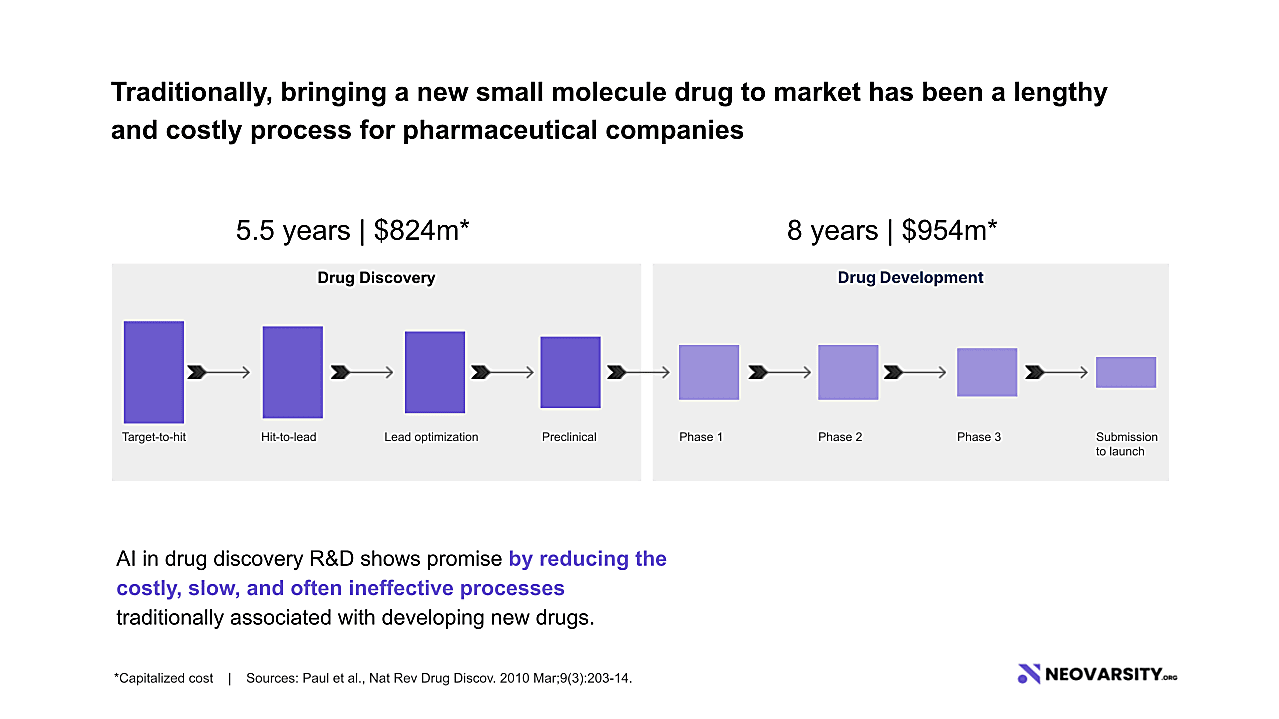
It involves multiple stages, each with its own set of challenges and requirements. This process can be broadly divided into the following stages:
1. Target Identification and Validation
Target Identification: The first step involves identifying a biological molecule (usually a protein) that plays a critical role in a disease process. This target should be druggable, meaning it can potentially be modulated by a drug.
Target Validation: Once a target is identified, it must be validated to confirm its role in the disease and to ensure that modulating this target will have a therapeutic effect.
2. Hit Identification
High-Throughput Screening (HTS): This technique involves testing thousands to millions of compounds against the target to identify 'hits' – compounds that show activity against the target.
Hit-to-Lead: Hits are further analyzed and refined to improve their potency, selectivity, and drug-like properties, leading to the identification of 'lead' compounds.
3. Lead Optimization
Chemical Modification: Lead compounds undergo extensive chemical modifications to enhance their efficacy, reduce toxicity, and improve pharmacokinetic properties (absorption, distribution, metabolism, and excretion).
In Vitro and In Vivo Testing: Optimized leads are tested in cell cultures and animal models to evaluate their biological activity and safety profile.
4. Preclinical Testing
Toxicology Studies: Comprehensive toxicology studies are conducted to assess the safety of the drug candidate in animals. This includes acute, sub-chronic, and chronic toxicity testing.
Pharmacokinetics (PK) and Pharmacodynamics (PD) Studies: These studies help understand how the drug is absorbed, distributed, metabolized, and excreted in the body, as well as its mechanism of action.
5. Clinical Trials
Phase I Trials: Conducted in a small group of healthy volunteers or patients to assess safety, tolerability, and pharmacokinetics.
Phase II Trials: Conducted in a larger group of patients to evaluate the efficacy, and optimal dosing, and further assess safety.
Phase III Trials: Large-scale trials involving thousands of patients to confirm efficacy, monitor side effects, and compare the drug to standard treatments.
Regulatory Review and Approval: Data from clinical trials are submitted to regulatory agencies (e.g., FDA, EMA) for review. If the drug meets the necessary safety and efficacy standards, it is approved for market release.
6. Post-Market Surveillance
- Phase IV Trials: Also known as post-marketing surveillance, these trials continue to monitor the drug's safety and efficacy in the general population. This stage helps detect any long-term or rare side effects and can lead to further refinement of the drug's use.
Challenges in Traditional Drug Discovery
High Attrition Rates: A significant percentage of drug candidates fail during the development process, particularly during clinical trials.
Cost and Time: The traditional process is expensive and time-consuming, often taking over a decade and costing billions of dollars from discovery to market.
Complexity of Biological Systems: Understanding the intricate mechanisms of disease and predicting how a drug will interact with the body remains challenging.
How AI is transforming small molecule drug discovery?
AI is revolutionizing the field of small molecule drug discovery, addressing many of the challenges inherent in the traditional process.
By leveraging advanced algorithms and vast datasets, AI enhances the efficiency, accuracy, and speed of discovering new drugs.
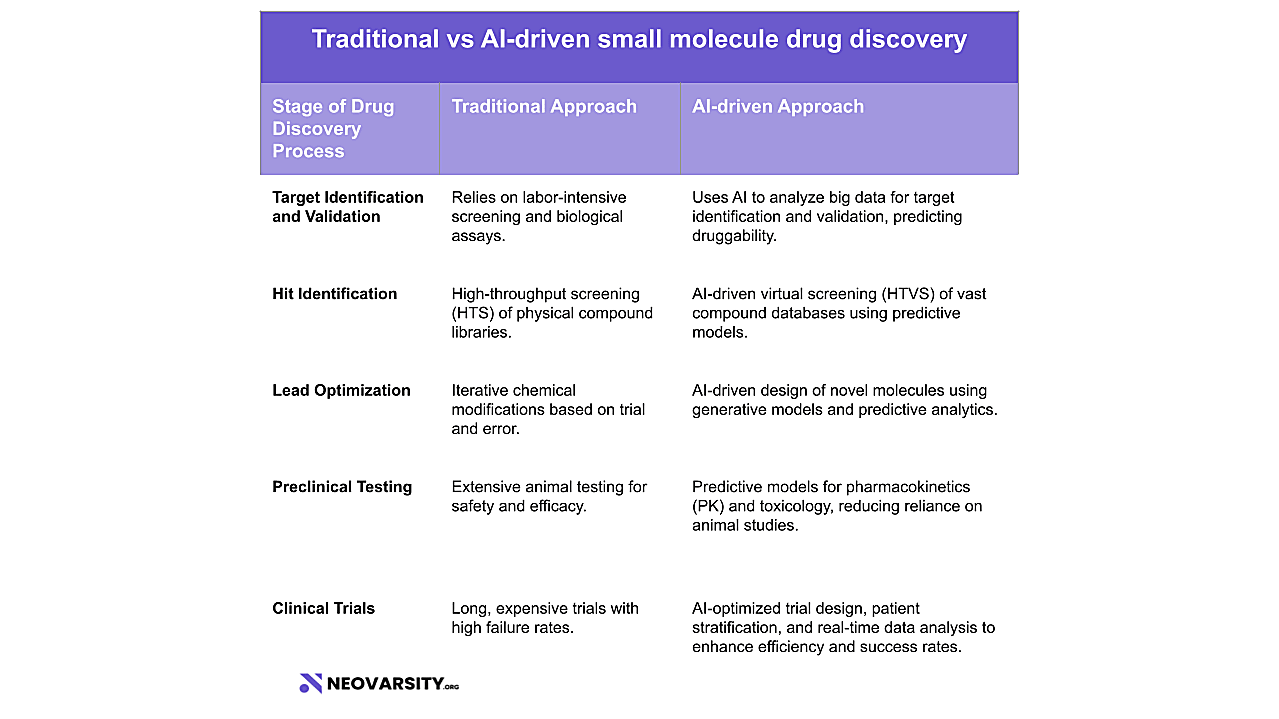
Here’s how AI is making a difference at various stages of the drug discovery pipeline:
1. Target identification and validation
AI Techniques: Machine learning algorithms can analyze large biological datasets to identify novel drug targets. AI can also predict the druggability of these targets with high accuracy.
Benefits: This reduces the time and cost associated with target identification and validation, increasing the chances of selecting viable targets early in the process.
2. Hit identification
AI Techniques: AI-driven high-throughput virtual screening (HTVS) can rapidly evaluate millions of compounds against a target using predictive models. AI can also prioritize compounds with the highest likelihood of success based on historical data.
Benefits: This significantly speeds up the hit identification process and increases the probability of finding promising candidates, reducing reliance on expensive and time-consuming physical screening.
3. Lead optimization
AI Techniques: Generative models, such as deep learning-based generative adversarial networks (GANs), can design new molecules with optimized properties. AI can also predict how modifications to a lead compound will affect its efficacy and safety.
Benefits: AI accelerates lead optimization by quickly generating and testing numerous variants, helping researchers identify the most promising candidates with desired properties.
4. Preclinical testing
AI Techniques: Predictive models can forecast the pharmacokinetics and toxicology of drug candidates based on their chemical structure. AI can also simulate how a drug will behave in different biological systems.
Benefits: This reduces the need for extensive animal testing and identifies potential issues early in the development process, improving the overall safety profile of the drug candidates.
5. Clinical trials
AI Techniques: AI can optimize clinical trial design by identifying the best patient cohorts and predicting patient responses. Machine learning algorithms can also analyze trial data in real time to make adjustments and improve outcomes.
Benefits: This enhances the efficiency and success rates of clinical trials, potentially reducing their duration and cost while ensuring better patient outcomes.
Addressing traditional challenges with AI
High Attrition Rates: AI improves the selection process for drug candidates by accurately predicting their success probabilities, thereby reducing the high attrition rates seen in traditional methods.
Cost and Time: AI accelerates every stage of the drug discovery process, from target identification to clinical trials, substantially cutting down both time and costs associated with drug development.
Complexity of Biological Systems: AI’s ability to analyze and interpret complex biological data provides deeper insights into disease mechanisms and drug interactions, leading to more informed decision-making and innovative therapeutic strategies.
By integrating AI into the small molecule drug discovery process, the pharmaceutical industry is poised to achieve breakthroughs more efficiently and cost-effectively, ultimately leading to the development of new and better treatments for a wide range of diseases.
What are AI technologies in small molecule drug discovery
In small molecule drug discovery, several AI technologies and techniques are employed to enhance various stages of the process. Here are some key AI technologies commonly used:
Machine Learning (ML)
Supervised Learning: Used for predictive modeling tasks such as predicting bioactivity or toxicity based on training data.
Unsupervised Learning: Applied in clustering and pattern recognition tasks to uncover hidden patterns in large datasets.
Reinforcement Learning: Used in optimizing decision-making processes, such as optimizing compound synthesis routes.
Deep Learning (DL)
Neural Networks: Used for tasks like virtual screening, predicting molecular properties, and optimizing molecular structures.
Convolutional Neural Networks (CNNs): Applied in image-based drug discovery tasks, such as analyzing molecular structures or biological images.
Recurrent Neural Networks (RNNs) and Long Short-Term Memory Networks (LSTMs): Used in sequence-based tasks, such as analyzing molecular sequences or biological data.
Generative Models
Generative Adversarial Networks (GANs): Used for generating novel molecules with desired properties or optimizing molecular structures.
Variational Autoencoders (VAEs): Applied in generating diverse molecular structures or exploring chemical space.
Natural Language Processing (NLP)
- Used for mining and extracting insights from scientific literature, patents, and clinical trial data relevant to drug discovery.
Quantum Machine Learning
- Applied in simulating molecular structures and properties at a quantum level, potentially accelerating the discovery of new materials and drugs.
Graph Neural Networks (GNNs)
- Used for tasks involving molecular graphs, such as predicting molecular properties, analyzing chemical reactions, or drug-target interactions.
Bayesian Optimization
- Applied in optimizing experimental design and decision-making processes, such as optimizing compound synthesis or selecting candidate molecules.
These AI technologies are collectively transforming small molecule drug discovery by accelerating the process, reducing costs, and enabling the exploration of novel chemical space that traditional methods may overlook.
Moreover, it is worth highlighting that developing new techniques to further enhance AI effectiveness in drug discovery is a highly active research area.
AI Applications Across the Drug Discovery Pipeline
Artificial Intelligence (AI) is revolutionizing the drug discovery process, enhancing efficiency, accuracy, and speed across various stages. Here’s an in-depth exploration of AI applications in each phase of the drug discovery pipeline:
1. Target Identification and Validation
AI plays a crucial role in identifying and validating potential drug targets, and optimizing this critical initial stage:
Data Mining and Integration: AI algorithms analyze vast amounts of biological data from genomic studies, protein databases, and scientific literature to identify disease-associated targets.
Predictive Modeling: Machine learning models predict the druggability and biological relevance of potential targets, helping prioritize those most likely to lead to successful drug development.
Network Analysis: AI techniques like graph theory and network analysis help uncover complex interactions within biological systems, identifying key nodes as potential targets.
2. Hit Discovery
AI accelerates hit discovery by efficiently screening large chemical libraries to identify promising compounds:
Virtual Screening: Using machine learning algorithms, AI conducts virtual screening of compound databases to predict and prioritize compounds with high binding affinity to target proteins.
Generative Models: AI-driven generative models, such as deep learning-based molecular design tools, generate novel compounds that fit desired target profiles, expanding the chemical diversity explored.
Structure-Activity Relationship (SAR) Prediction: AI predicts SAR relationships based on known data, guiding the selection and optimization of hits with improved potency and selectivity.
3. Lead Optimization
AI facilitates lead optimization by designing and refining compounds with optimal pharmacological properties:
Generative Chemistry: AI-based generative models iteratively design new molecules with desired properties, considering parameters like bioavailability, toxicity, and target specificity.
Quantum Mechanics Simulations: Quantum machine learning enhances accuracy in predicting molecular properties and interactions at a quantum level, guiding precise modifications for lead optimization.
AI-Driven SAR Analysis: Machine learning models analyze and predict SAR patterns from experimental data, guiding iterative chemical modifications to enhance potency and reduce off-target effects.
4. ADMET Prediction (Absorption, Distribution, Metabolism, Excretion, Toxicity)
AI predicts ADMET properties to assess the pharmacokinetic and toxicological profiles of drug candidates:
Predictive Modeling: Machine learning models trained on large datasets predict ADMET properties early in drug development, reducing the likelihood of failures due to poor pharmacokinetics or toxicity.
Multi-Parameter Optimization: AI tools optimize drug candidates across multiple ADMET parameters simultaneously, balancing efficacy with safety and minimizing risks in later stages.
5. Clinical Trial Design and Analysis
AI optimizes clinical trial design and analysis to improve efficiency and outcomes:
Patient Selection: Machine learning algorithms analyze patient data to identify suitable candidates based on biomarkers, genetic profiles, and disease characteristics, enhancing trial success rates.
Real-Time Data Analysis: AI monitors and analyzes real-time trial data, identifying trends, predicting patient responses, and optimizing trial protocols dynamically.
Outcome Prediction: Predictive modeling predicts treatment outcomes based on patient data and trial parameters, guiding decision-making and accelerating the approval process.
Benefits of AI in Small Molecule Drug Discovery
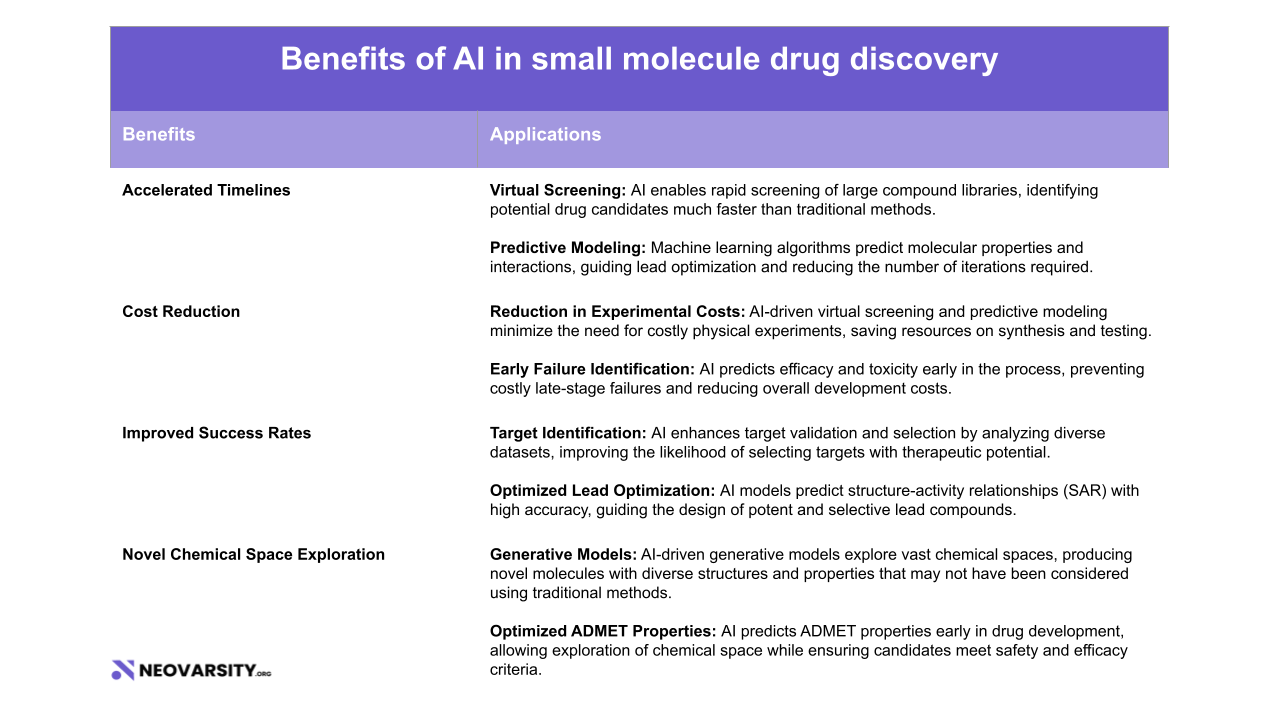
AI brings several significant benefits to small molecule drug discovery, transforming the process in multiple ways:
Accelerated Timelines
Virtual Screening: AI enables rapid screening of large compound libraries, identifying potential drug candidates much faster than traditional methods.
Predictive Modeling: Machine learning algorithms predict molecular properties and interactions, guiding lead optimization and reducing the number of iterations required.
Cost Reduction
Reduction in Experimental Costs: AI-driven virtual screening and predictive modeling minimize the need for costly physical experiments, saving resources on synthesis and testing.
Early Failure Identification: AI predicts efficacy and toxicity early in the process, preventing costly late-stage failures and reducing overall development costs.
Improved Success Rates
Target Identification: AI enhances target validation and selection by analyzing diverse datasets, improving the likelihood of selecting targets with therapeutic potential.
Optimized Lead Optimization: AI models predict structure-activity relationships (SAR) with high accuracy, guiding the design of potent and selective lead compounds.
Novel Chemical Space Exploration
Generative Models: AI-driven generative models explore vast chemical spaces, producing novel molecules with diverse structures and properties that may not have been considered using traditional methods.
Optimized ADMET Properties: AI predicts ADMET properties early in drug development, allowing exploration of chemical space while ensuring candidates meet safety and efficacy criteria.
Examples of AI benefits in practice
Atomwise: Used AI to identify potential treatments for Ebola and multiple sclerosis by screening billions of compounds against target proteins, significantly accelerating hit discovery.
Insilico Medicine: Developed AI-driven generative models to design new molecules, demonstrating faster lead optimization and exploration of novel chemical space.
DeepMind: Utilized AI to predict protein structures with high accuracy, aiding in drug target identification and rational drug design.
AI’s ability to automate and optimize various stages of drug discovery not only accelerates the development timeline but also reduces costs and improves the success rates of identifying effective therapies.
As AI technologies continue to advance, they hold promise for revolutionizing drug discovery, leading to the discovery of safer, more effective drugs for a wide range of diseases.
Challenges and limitations of AI in small molecule drug discovery
Despite its transformative potential, AI faces several challenges and limitations in the context of small-molecule drug discovery:
Data Quality and Quantity Issues
Limited Datasets: Availability of high-quality, well-annotated datasets is crucial for training accurate AI models. The scarcity of comprehensive and diverse datasets can hinder model performance.
Data Bias: Biases in training data can lead to skewed predictions and inaccurate results, impacting the reliability of AI-driven insights.
Interpretability of AI Models
Black Box Problem: Complex AI models, such as deep neural networks, often lack transparency in how they arrive at their decisions. This opacity makes it challenging for researchers to interpret model outputs and understand the rationale behind predictions.
Trust and Validation: Regulatory agencies and stakeholders require interpretable models to justify decisions and ensure safety and efficacy standards are met.
Regulatory Considerations
Validation and Approval: Regulatory bodies (e.g., FDA, EMA) require rigorous validation and evidence of AI models' reliability and performance before approving their use in drug discovery.
Compliance: Ensuring AI applications comply with regulatory guidelines and standards for data privacy, patient safety, and ethical considerations poses significant challenges.
Integration with Existing Workflows
Workflow Compatibility: Incorporating AI tools and technologies into existing drug discovery workflows requires seamless integration with conventional experimental and computational methods.
Skill Requirements: Adequate training and expertise are essential to effectively implement and manage AI-driven processes within pharmaceutical research teams.
Ethical and Legal Implications
Data Privacy: Handling sensitive patient data and ensuring compliance with data protection regulations (e.g., GDPR) pose ethical challenges.
Bias Mitigation: Addressing biases in AI algorithms to ensure fair and unbiased decision-making in drug discovery and patient care.
Addressing challenges and moving forward
Enhanced Data Strategies: Investing in data acquisition, curation, and sharing initiatives to improve data quality and diversity.
Explainable AI (XAI): Developing AI models with built-in explainability to enhance transparency and facilitate trust among stakeholders.
Collaboration and Regulation: Fostering collaboration between researchers, industry, and regulatory agencies to establish standards and guidelines for AI-driven drug discovery.
Education and Training: Providing comprehensive training programs to equip researchers with the skills needed to leverage AI effectively and responsibly.
Navigating these challenges requires a concerted effort from stakeholders across the pharmaceutical industry, regulatory bodies, and academia to harness the full potential of AI while addressing its limitations.
Future trends and prospects in AI for small molecule drug discovery
As AI continues to evolve, several emerging trends and prospects are shaping the future of small-molecule drug discovery:
Quantum Computing in Drug Discovery
Enhanced Molecular Simulations: Quantum computing promises to revolutionize molecular simulations by accurately predicting complex molecular interactions and properties that classical computers struggle to simulate.
Accelerated Virtual Screening: Quantum algorithms can efficiently explore vast chemical spaces, speeding up the process of identifying novel drug candidates with optimal properties.
Drug Design Optimization: Quantum computing enables precise optimization of molecular structures and properties, facilitating the development of highly targeted therapies.
AI-Human Collaboration Models
Augmented Intelligence: Integrating AI into human-driven drug discovery teams enhances decision-making by providing data-driven insights and predictions.
Interactive Modeling: AI tools that offer real-time feedback and visualization empower researchers to explore and manipulate molecular designs effectively.
Cross-Disciplinary Collaboration: Bridging AI expertise with domain-specific knowledge fosters innovative approaches to drug discovery, combining computational power with biological insights.
Ethical Considerations
Data Privacy and Security: Strengthening measures to protect patient data and ensure compliance with evolving data protection regulations (e.g., GDPR, HIPAA).
Bias Mitigation: Implementing strategies to detect and mitigate biases in AI algorithms to ensure fairness and equity in drug discovery processes.
Transparency and Accountability: Enhancing transparency in AI-driven decision-making processes to build trust among stakeholders and regulatory bodies.
Potential impacts and challenges
Impact on Drug Development Timelines: Quantum computing and advanced AI models have the potential to significantly reduce the time from drug discovery to market, accelerating access to new therapies.
Advancements in Personalized Medicine: AI's ability to analyze large-scale patient data facilitates personalized treatment approaches, tailoring therapies to individual genetic profiles and disease characteristics.
Regulatory Adaptation: Regulatory agencies are adapting to the rapid advancements in AI technologies, establishing guidelines and frameworks to ensure safety, efficacy, and ethical standards are met.
Looking ahead
The convergence of AI, quantum computing, and collaborative models holds immense promise for transforming small-molecule drug discovery.
These advancements not only enhance the efficiency and success rates of drug development but also pave the way for innovative treatments targeting complex diseases.
As these technologies continue to mature, fostering interdisciplinary collaboration and addressing ethical considerations will be crucial in realizing their full potential to improve global healthcare outcomes.